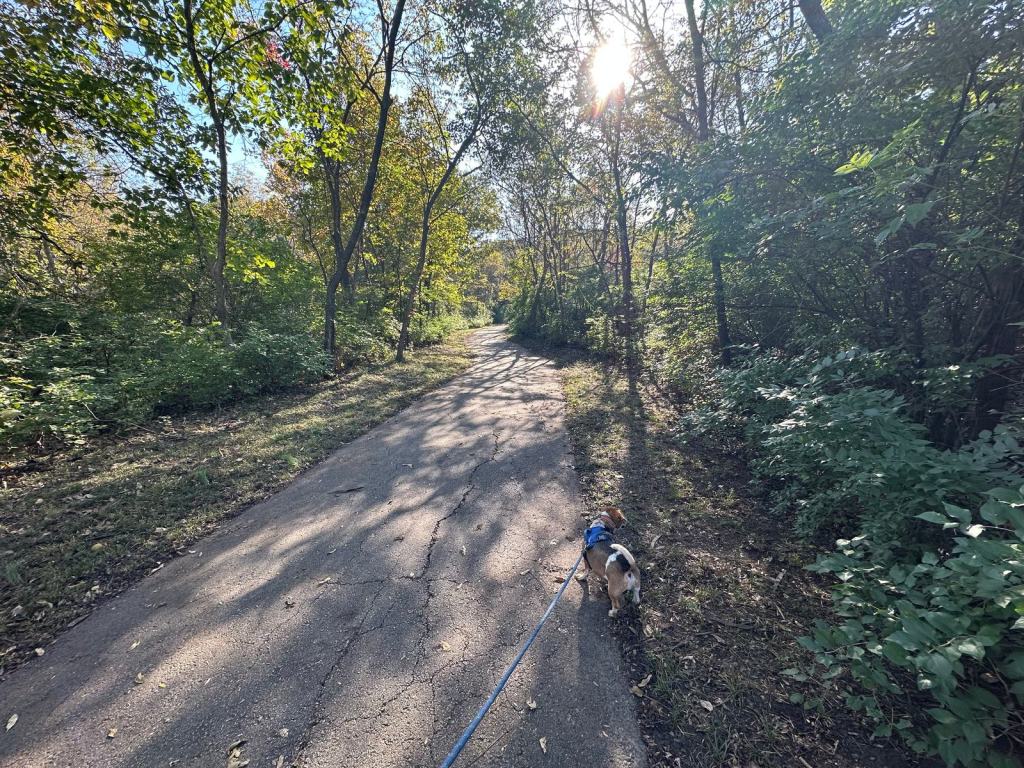
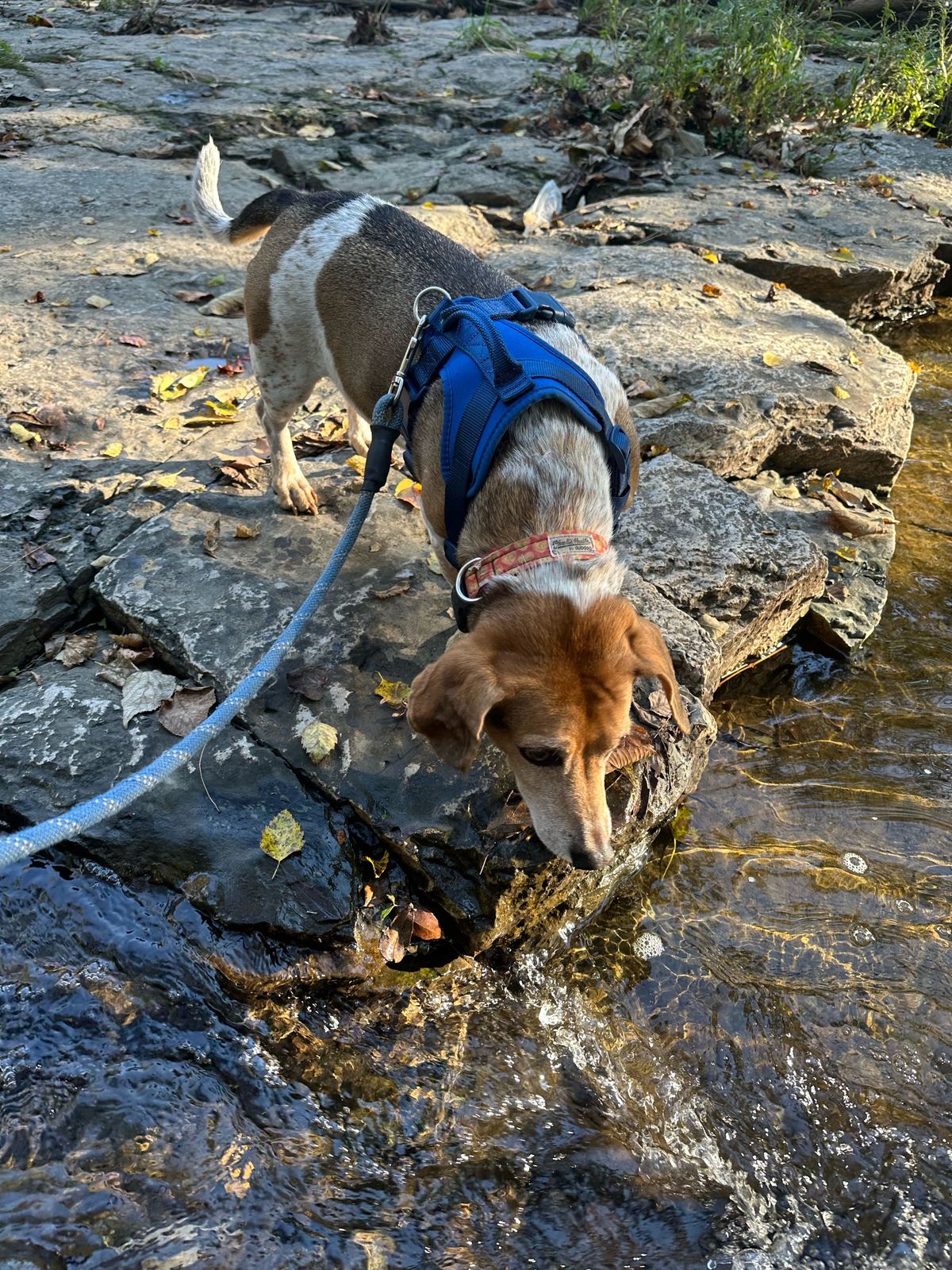
The walk that changed how we hike wasn’t a big adventure. It was an ordinary trail walk, the kind my human and I used to stretch out longer from time to time. On the way back to the car, I sat down. Then I walked about 100 feet and sat down again. And again. Every 100 feet or so, all the way back.
That’s when my human knew it was time to start limiting our distances.
Hi, I’m Banner. I’m a 12-year-old beagle-dachshund mix, and I’m here to tell you that the trail isn’t just for young dogs. It just looks a little different now.
My human named me after Bruce Banner. Most days I’m calm and scholarly. Then I catch a scent of rabbit and something enormous takes over. Small dog, Hulk-sized nose. At 12, I still want to go everywhere. My knees just want a say in how we get there.
If you’re thinking about hiking with a senior dog, this post is everything my human and I have learned about doing it safely: how we choose trails, how we pace ourselves, the signs that mean “turn around,” and what’s in our pack. My human wrote the practical parts. I supervised.
Quick note from the human: I’m not a vet. This is what we’ve learned from our own hikes and from our vet, plus a few trustworthy sources linked at the bottom. Every older dog is different, so please talk to yours before you change your dog’s exercise routine.
The Short Answer: Can You Hike With a Senior Dog?
Usually, yes, with a different definition of “hike.”
The American Animal Hospital Association (AAHA) defines a senior dog as one in the last 25% of its expected lifespan [1]. That means “senior” depends on size and breed, not a single birthday. Smaller dogs may reach it around age 12, and large breeds may get there as early as 7 or 8 [1]. If your dog is a senior, the goal shifts. It’s no longer about distance or summits. It’s about time outside, things to smell, and coming home happy and tired, not sore and wiped out.
For us, a great senior hike looks like this:
- About 2 miles on a mostly flat path. That’s my realistic range. When it’s a comfortable 60–75°F, we can push to 3.
- Lots of stops. We stop for a good sniff about every 10 minutes. Sniffing is the main event, not a delay.
- Shade and cool temperatures
- An easy way to cut it short
Start With a Vet Check (Seriously)
Before you plan longer outings, these three questions are worth asking your vet:
- Is there anything in my dog’s joints, heart, or breathing that should limit exercise?
- What signs of pain or fatigue should I watch for in my dog specifically?
- Is my dog at a healthy weight for this? Extra weight makes every step harder on older joints, and it’s a known risk factor for back problems in dachshunds [2].
For what it’s worth, our vet hasn’t put any limits on my walks or hikes. That’s our vet talking about me, though, not a rule for your dog. The limits we do follow came from paying attention on the trail, so please ask your own vet what’s right for yours.
Pick the Right Trail: Our Senior-Dog Trail Checklist
A trail that’s “easy” for a human can be a lot for a 12-year-old with 4-inch legs. Here’s what my human looks for:
- Surface: Paved, packed dirt, or crushed gravel beats rock gardens, big roots, and steep rock steps.
- Grade: Look for elevation gain on the trail listing. Short steep sections can be harder than long flat ones.
- Loop vs. out-and-back: Out-and-backs are underrated for older dogs because you can turn around at any point. On a loop, the halfway point is a commitment.
- Shade: Trees beat open prairie in summer.
- Water: Natural water is nice, but always carry your own.
- Crowds: Busy trails mean more dogs, bikes, and kids. That’s fine for some seniors and stressful for others.
- Dog rules: Check the official park page. Some beautiful trails don’t allow dogs at all, so check before you load the car.
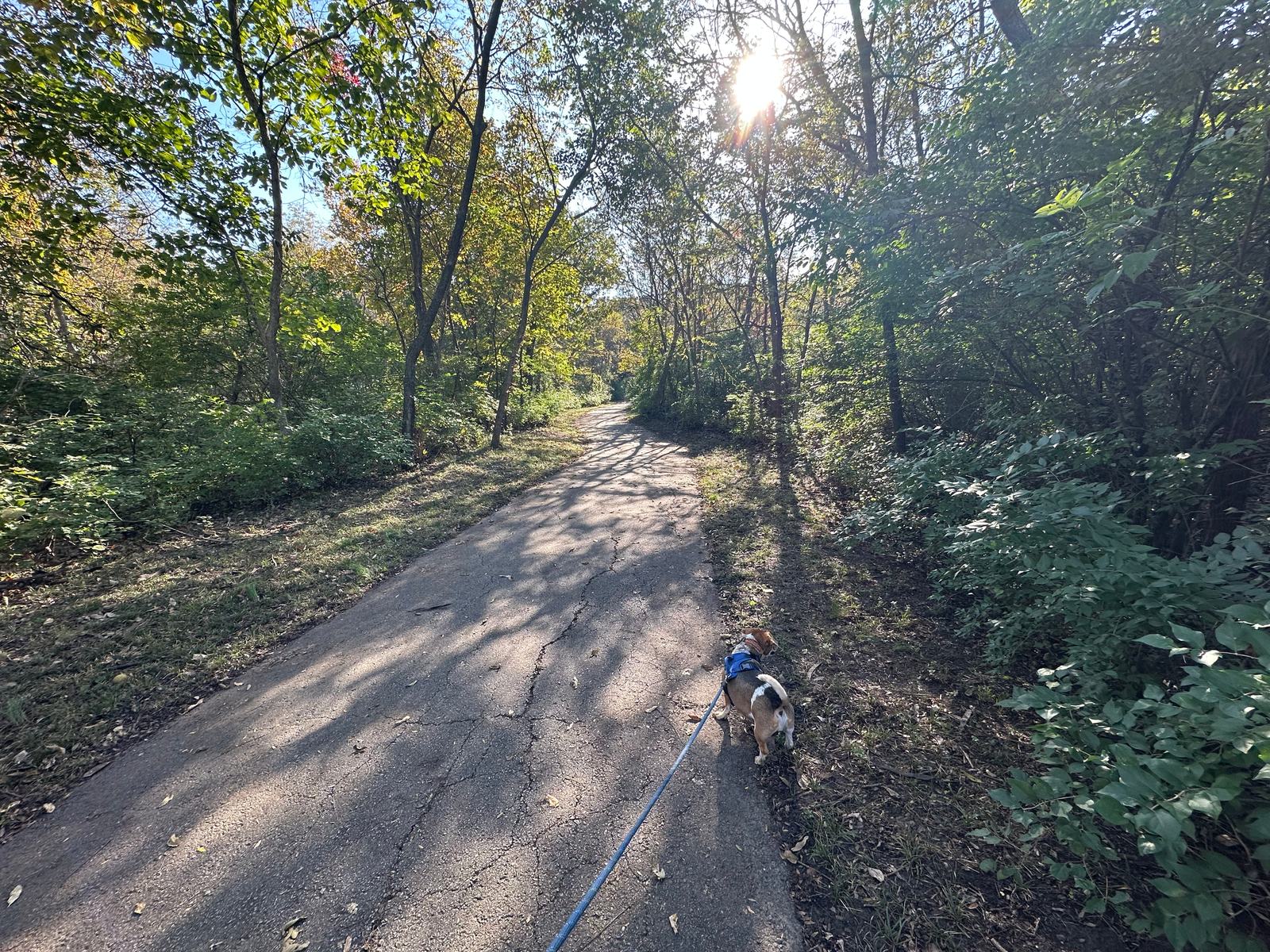
Pace: Why We Hike at Sniff Speed
Here’s my favorite part. When my human slowed down to my pace, our hikes got better.
Sniffing isn’t wasted time. For a nose-first dog, it’s the whole adventure. A slow, sniffy mile can tire me out in a good way, the same way a long, fast walk used to. Here’s how we do it:
- Warm up. The first five to ten minutes are a slow stroll. Older joints like a gentle start.
- Let the dog lead the stops. If I want to read a fence post for 90 seconds, I read the fence post.
- Use a “halfway rule.” Plan to turn around before your dog seems tired. Every step out is a step you have to walk back. I learned that one 100 feet at a time.
- Stop often. We stop for a good sniff about every 10 minutes. On warm days, offer water at the stops, too.
My human keeps a little log of our distance, time, and how I acted that night and the next morning. Over a few weeks, it shows what my real comfortable range is. (We made a printable version: the Senior Dog Adventure Checklist and the Dog Hiking Log.)
Signs It’s Time to Turn Around
This is the most important section. My human knows these by heart now:
- Lagging behind when I’m usually out front, or stopping and lying down
- Limping, stiffness, or a change in gait, like a bunny-hop, a hind end that wobbles, or toes that scuff
- Heavy panting that doesn’t settle with rest and shade
- Reluctance: sitting down, turning back toward the car, or refusing a step. (For me, it was sit breaks every 100 feet on the way back.)
- Hiding pain: licking a leg or paw, or a hunched back
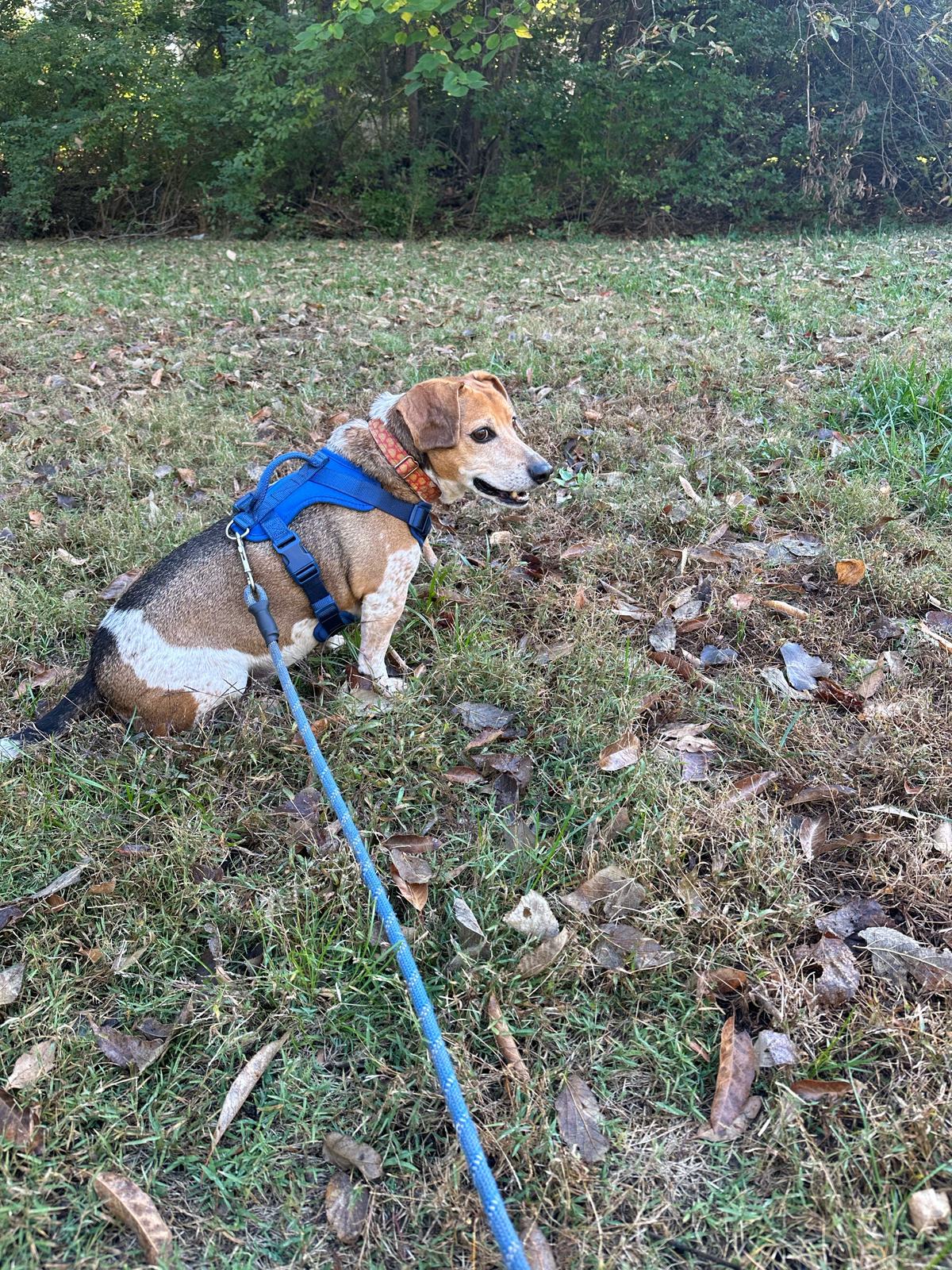
If you see any of these, the hike is over. Rest, offer water, and head back slowly. If it’s a big change, or it doesn’t go away, call your vet.
Sometimes “over” means a lift. This is why a harness with a handle lives in our gear bin.
Heat Is the Big One
According to the American Veterinary Medical Association, older dogs are at higher risk of heatstroke, along with short-nosed breeds and dogs with heart or breathing problems [3]. Here’s what we do:
- Hike early or late. Summer mornings are our hiking time.
- Test the pavement. Put the back of your hand on it for a few seconds. If it’s too hot for you, it’s too hot for paws [4].
- Choose shade and shorter routes from late spring through early fall.
- Carry more water than you think you need, and offer it often.
- Know the warning signs. Heavy panting, drooling, weakness, stumbling, vomiting, or collapse. Heatstroke is an emergency, so get to a vet right away [3][5].
Our numbers: 60–75°F is my comfortable range, and that’s when we can push to 3 miles. Above 85°F, even 1 mile is pushing it for me. Those are my numbers, not a rule for every dog.
Protect the Back: Notes for Long-Backed and Short-Legged Dogs
The dachshund in me comes with a long spine. Dachshunds are prone to intervertebral disc disease (IVDD), and the AKC notes that jumping or a hard landing can injure a disc [2]. So on the trail, my human:
- Lifts me over big steps, logs, and drop-offs instead of letting me jump, using a harness handle that supports my chest and belly.
- Skips scrambles. If a trail needs hands, it’s not a trail for me.
- Uses a ramp at the car instead of letting me leap out of the back.
- Keeps me trim. Extra weight is a known IVDD risk for dachshunds [2]. (I have filed a formal complaint.)
If your dog has ever had a back episode, ask your vet what kind of activity is safe before you hit the trail.
What We Pack for a Senior Dog Hike
Our pack is small but specific:
- A supportive harness with a handle for lifts and boosts.
- A 6-foot leash. Many parks, including Missouri State Parks, cap leashes at 10 feet [6].
- Water and a collapsible bowl
- High-value treats for check-ins (and bribery)
- A dog first-aid kit, with gauze, vet wrap, a tick remover, and any meds your vet recommends
- Booties for hot or rough surfaces, if your dog will tolerate them
- A cooling bandana for warm days
- A small towel and a car blanket for muddy endings
- A backup plan for tired legs. For some seniors, that’s a dog stroller or a carrier.
📋 Want our checklists?
Join Trail Mail for the free Dog Road Trip Packing List, plus easy-trail picks and senior-dog tips about once a week.
After the Hike: Recovery Matters
What happens after the hike tells you whether the hike was right:
- Cool down with a slow last five minutes back to the car.
- Do a quick check: paws, pads, between the toes, and a tick check. Ears too, if your dog has floppy ears like mine.
- Offer water and a comfy, supportive spot to nap.
- Watch for stiffness that evening and the next morning. A little sleepiness is normal. Limping or reluctance to move is a sign the outing was too much. Next time, go shorter, and check with your vet if it doesn’t go away.
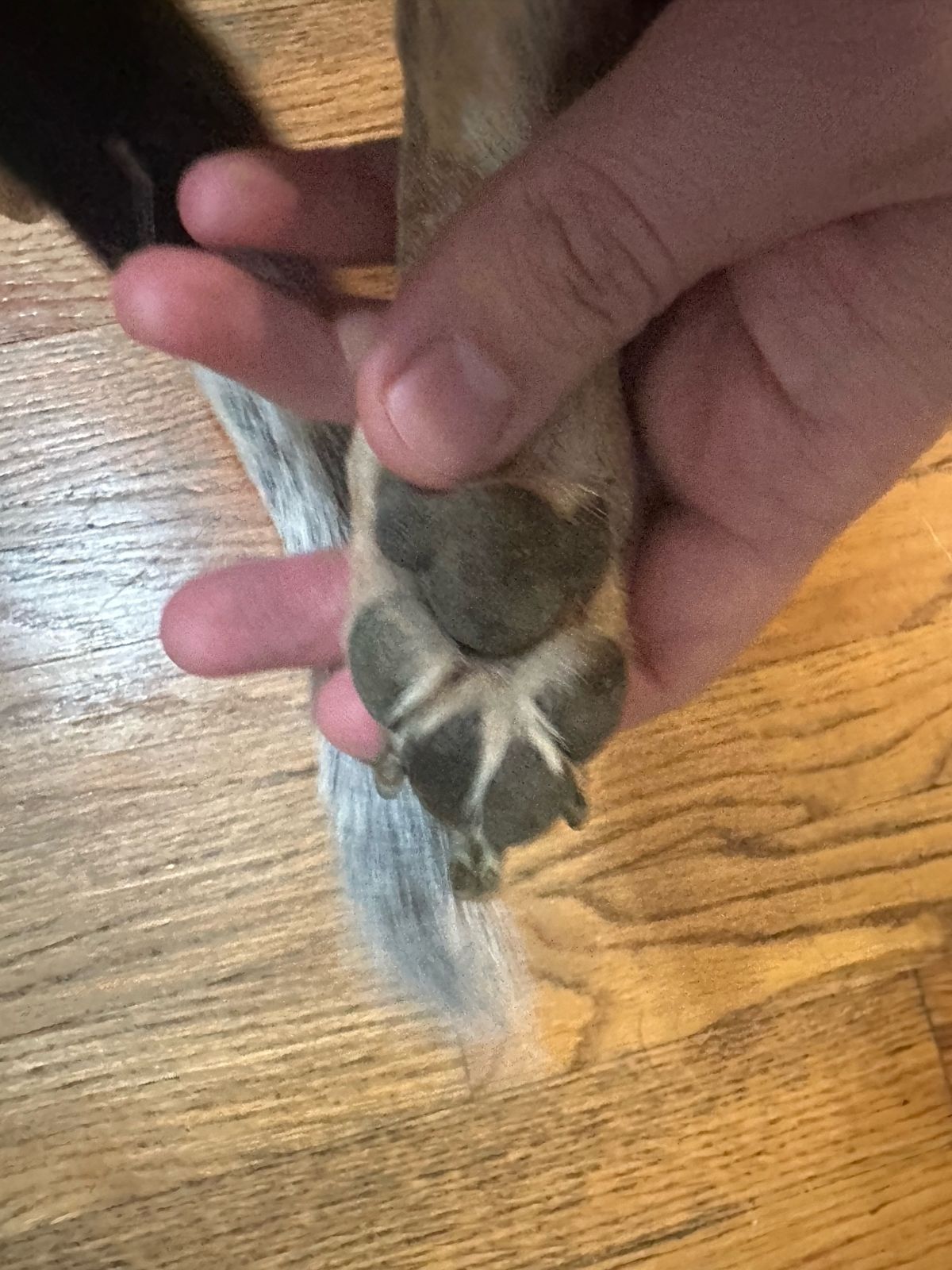
Remember that walk at the top of this post? The warning signs showed up on the way back to the car, not the next morning. So watch the return trip too. If your dog is fading on the way back, the outing was too long, and next time should be shorter.
FAQ
How far can a senior dog hike?
There’s no single number. It depends on your dog’s health, breed, weight, fitness, and the weather. Start short, on flat ground, and track how your dog does that night and the next day. Then ask your vet what’s reasonable. For me, it’s about 2 miles, or 3 on a comfortable 60–75°F day.
Is it OK to hike with a dog with arthritis?
Many dogs with arthritis still benefit from gentle movement, but the right amount is a vet question. Ask yours before you plan longer outings.
When is a dog considered a senior?
AAHA defines a senior dog as one in the last 25% of its expected lifespan. That varies by breed and size [1].
Should I use a harness or a collar for an older dog?
We use a harness so a pull doesn’t put pressure on the neck, and so we have a handle for lifts.
The Bottom Line
Hiking with a senior dog is about slowing down, not giving up. Pick gentle trails, go when it’s cool, let your dog sniff, and turn around early. Bring a way to help them over the hard parts. When we do this right, I come home with a full nose and a happy, tired tail, and I’m ready to sniff again next weekend.
📋 Want our checklists?
Join Trail Mail for the free Dog Road Trip Packing List, plus easy-trail picks and senior-dog tips about once a week.
Banner’s human is not a veterinarian. This post shares personal experience and general information from the sources below, not medical advice.
Sources
- AAHA, Defining the Senior Patient (2023 Senior Care Guidelines) — https://www.aaha.org/resources/2023-aaha-senior-care-guidelines-for-dogs-and-cats/defining-the-senior-patient/
- American Kennel Club, Intervertebral Disc Disease in Dogs — https://www.akc.org/expert-advice/health/intervertebral-disk-disease-dogs/
- AVMA, Warm Weather Pet Safety — https://www.avma.org/resources-tools/pet-owners/petcare/warm-weather-pet-safety
- AVMA, Walking or Running With Your Dog — https://www.avma.org/resources-tools/pet-owners/petcare/walking-your-pet
- AAHA, How Can I Prevent Heatstroke in My Pet? — https://www.aaha.org/resources/how-to-prevent-heatstroke-in-dogs-and-cats/
- Missouri State Parks, Laws and Regulations — https://mostateparks.com/page/laws-and-regulations


Leave a Reply